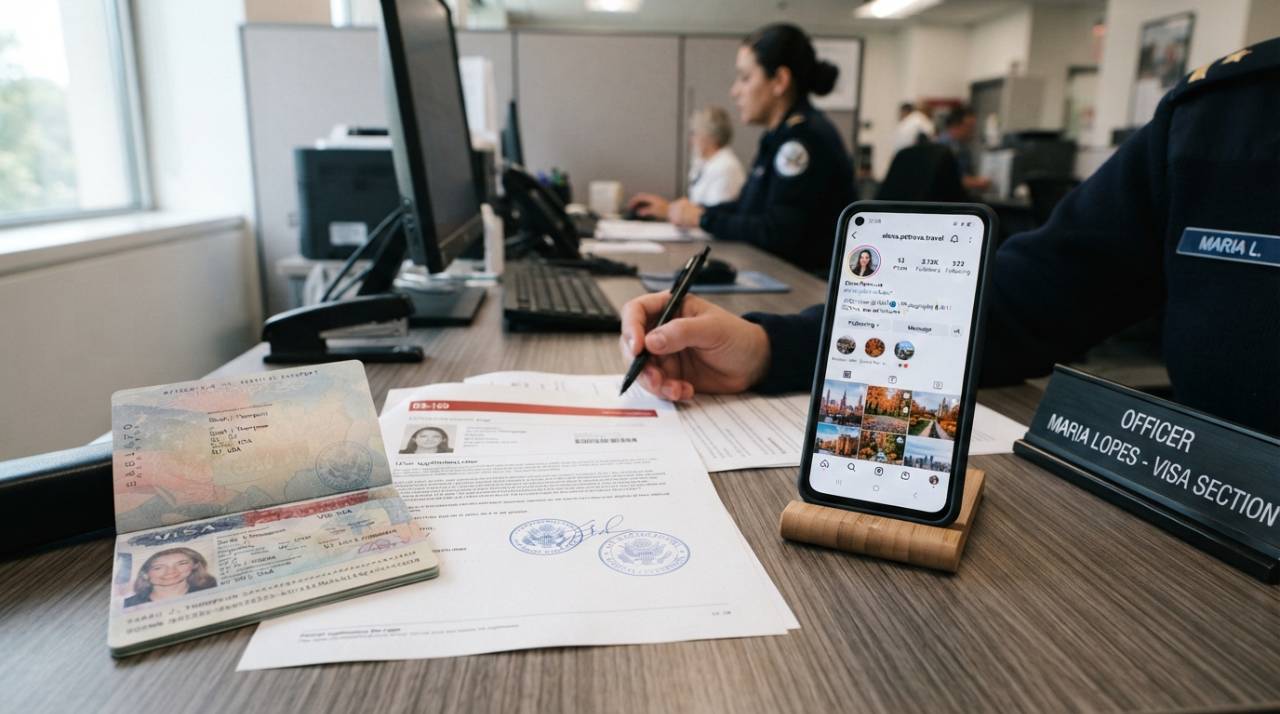


Payam Javan: The Trump administration is expanding its vetting procedures for foreign nationals seeking entry into the United States, according to recent statements and internal documents from the U.S. State Department. The policy expansion aims to bolster national security and public safety by requiring a broader range of visa applicants to undergo comprehensive social media screening.
An internal memorandum obtained by media outlets reveals that the administration plans to widen these social media vetting requirements to encompass additional categories of visa applicants. A State Department spokesperson, while declining to comment directly on internal documents, emphasized that the administration is committed to maintaining high standards of national security, reiterating Secretary of State Marco Rubio’s stance that a visa is a privilege rather than a right.
Under the new directives outlined in the memo, affected applicants are instructed to adjust their social media settings to “public” or “open” to facilitate the screening process. This requirement will now apply to foreign media representatives as well as Canadian and Mexican citizens entering the United States for business purposes under the United States-Mexico-Canada Agreement (USMCA), including their dependents.
The State Department confirmed its commitment to screening and vetting foreign nationals to the fullest extent possible before they are admitted to the country. Officials stated that these measures are designed to ensure that visitors respect U.S. laws, adhere to the terms of their admission, and do not pose any threat to national security, public safety, or broader national interests.
Furthermore, the department indicated that it continuously reviews and refines its screening and vetting procedures globally. This ongoing evaluation is intended to ensure that the visa application process consistently meets the highest security benchmarks while adapting to evolving global security challenges.
The expansion builds upon existing policies that already mandate enhanced social media screening for several visa categories. These include student and exchange visitor visas, temporary worker visas such as the H-1B, religious worker visas, and those designated for witnesses, informants, and victims of crimes.
This escalation of visa vetting coincides with other stringent immigration measures introduced by the administration, such as making permanent a visa bond program for certain countries to deter overstays. While supporters argue these steps are necessary to enforce immigration laws and protect public safety, critics contend that the measures create unnecessary hurdles for legitimate travelers and make legal immigration increasingly difficult.