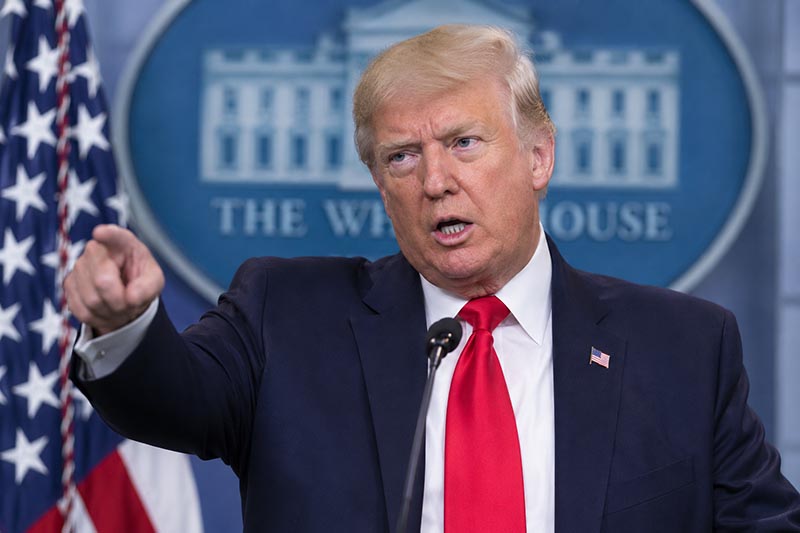


Payam Javan: U.S. President Donald Trump said on November 6 that American forces had carried out limited strikes against an Iranian air defense system near Qeshm Island in the Strait of Hormuz. Speaking to reporters, Trump described the operation as a brief attack, saying Iranian forces had built an anti-aircraft system that U.S. forces disabled within minutes. The remarks came after Iranian state media reported missile strikes in the area.
Iran’s state-run IRNA news agency reported that two missiles struck the Suza area of Qeshm Island, although it provided few details about the incident. On November 7, the agency also reported that an MQ-9 drone had been shot down over the island, claiming the aircraft belonged to the U.S. military. The reports have not been independently verified. The latest developments follow several previous U.S. military operations targeting Iranian facilities on the strategically important island.
Trump also indicated that diplomatic contacts with Tehran were continuing, claiming that Iran was eager to reach an agreement and that significant progress had been made. Qatar’s Prime Minister, Sheikh Mohammed bin Abdulrahman Al-Thani, confirmed on Saturday that mediation efforts between Washington and Tehran remained ongoing. He said negotiators should not wait for a perfect agreement and expressed hope that a workable settlement could be reached.
The latest strikes follow earlier U.S. operations against Iranian military installations on Qeshm Island, including attacks reported in June and September. The developments come amid continuing tensions over Iran’s nuclear program and regional military activities. Trump said on November 4 that the conflict with Iran had contributed to Republican losses in the U.S. midterm elections, but defended the military campaign as necessary to prevent Tehran from acquiring nuclear weapons. He told The Wall Street Journal that he believed he had made the right decision and would have acted the same way again.
Meanwhile, U.S. Central Command announced on November 6 a reward of up to $20 million, along with possible relocation assistance, for information about Iran’s nuclear program. The initiative seeks information about nuclear facilities, equipment, personnel, scientists and their movements. The reward announcement cited a 2025 International Atomic Energy Agency report stating that Iran had produced uranium enriched to 60 percent purity, significantly above the level required for most civilian nuclear applications and approaching the approximately 90 percent generally associated with weapons-grade uranium. The announcement adds another dimension to Washington’s efforts to gather intelligence on Iran’s nuclear activities as military pressure and diplomatic negotiations continue.