
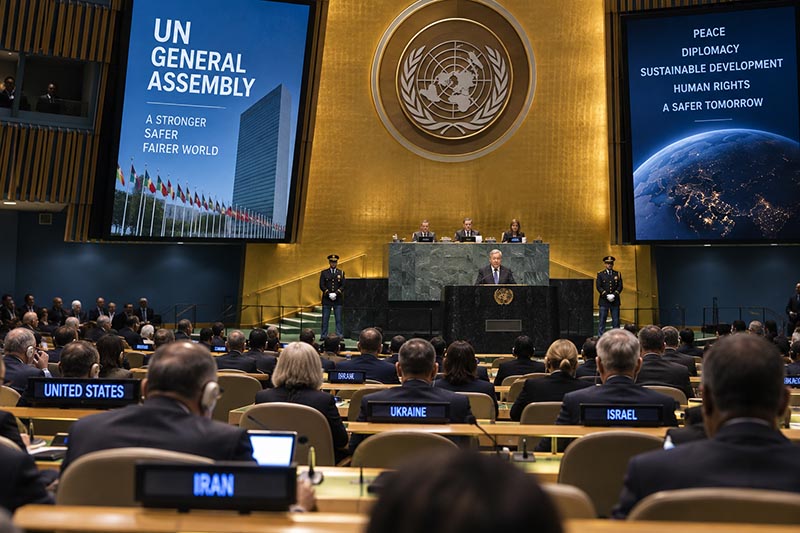


Nearly 130 heads of state and government are gathering in New York this week for the United Nations General Assembly, with discussions expected to focus on conflicts in the Middle East and Ukraine, artificial intelligence, food security and the future of the international system. The annual meeting comes as the post-World War II global order faces growing pressure and the United Nations confronts financial and political challenges.
China’s President Xi Jinping will not attend the gathering in person, instead planning talks with U.S. President Donald Trump in Washington. His absence has renewed questions about the UN’s ability to address major international crises. Meanwhile, Secretary-General Antonio Guterres is approaching the end of his term in 2026, with no clear frontrunner yet emerging in the race to succeed him.
Artificial intelligence will be another major issue at the assembly after technology executives and researchers raised concerns about the pace of AI development and potential risks to human control. Guterres has called for international “guardrails” governing the technology and has promoted global cooperation on AI since the UN established an advisory body on the issue in 2023. Trump, however, has dismissed concerns about AI risks and criticized what he described as efforts to undermine technological development.
The Middle East will also dominate diplomatic discussions as the conflict involving Iran continues to affect regional security, shipping and energy markets. The growing presence of Houthi forces around the Bab el-Mandeb Strait has added concerns about international trade and energy supplies. Iranian President Masoud Pezeshkian is scheduled to address the General Assembly on Wednesday, while Israeli Prime Minister Benjamin Netanyahu is expected to speak Thursday. Palestinian Authority President Mahmoud Abbas, who was again denied a U.S. visa, has been authorized to address the assembly by video.
The war in Ukraine will remain another central issue, with Ukrainian President Volodymyr Zelenskyy and Russian Foreign Minister Sergei Lavrov scheduled to address the assembly. The UN Security Council has been unable to take decisive action to end the conflict because Russia, as a permanent member, holds veto power. Guterres has also highlighted the war’s effects on food security and energy prices, calling for safe Black Sea routes for Ukrainian and Russian exports of food, fertilizer and energy.


