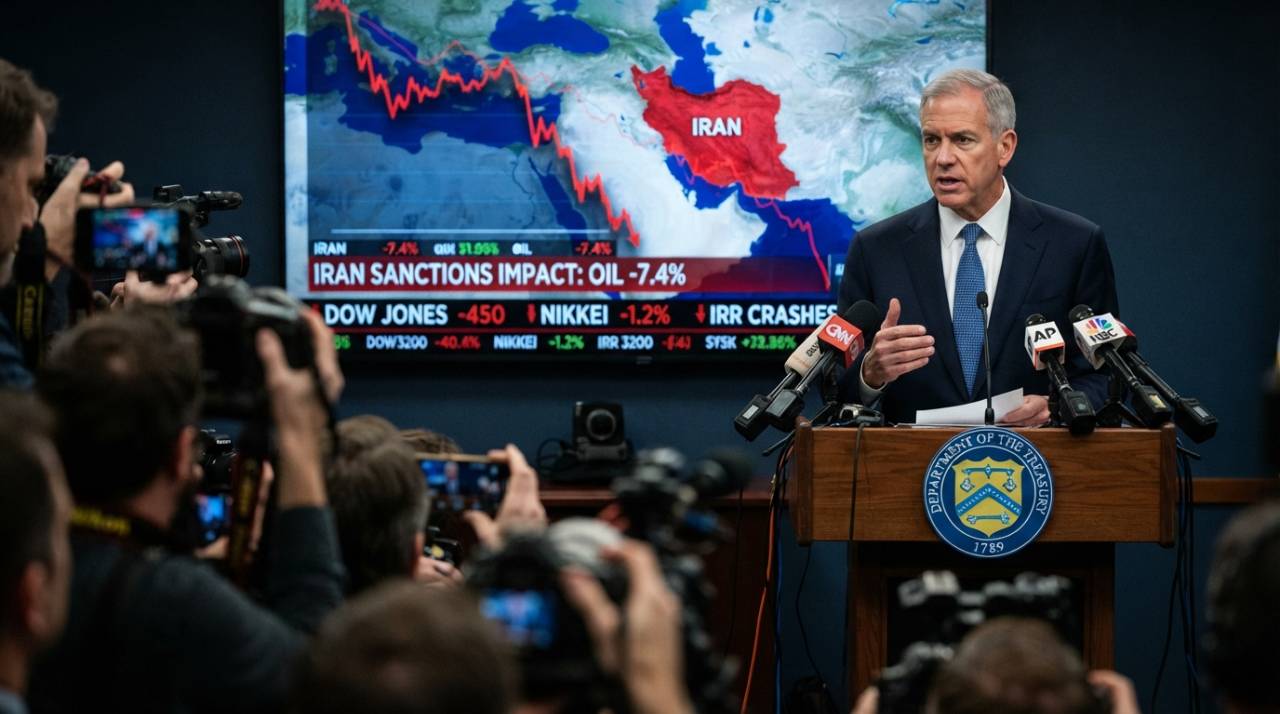


Payam Javan: The United States is preparing to implement what officials describe as the most stringent economic sanctions in its history against Iran, with Treasury Secretary Scott Bessent scheduled to detail the measures on Monday. This move follows an announcement by President Donald Trump regarding an escalated economic campaign designed to isolate the Iranian economy. The escalation comes amid heightened regional tensions and the collapse of a previous memorandum of understanding between Washington and Tehran, which led to a resumption of hostilities earlier this year.
According to Secretary Bessent, the upcoming measures represent a coordinated effort to maximize pressure on Iran through a combination of an active naval blockade and comprehensive financial sanctions. Bessent urged international allies to support the initiative, framing the campaign as a decisive choice for the global community. The Treasury Department warned that any nations, financial institutions, or private entities continuing to conduct business with Iran—particularly through oil purchases or maritime transfers—will face severe secondary sanctions and regulatory enforcement from the U.S. government.
The Trump administration indicates that this shift toward “maximum economic pressure” is intended to degrade Iran’s capacity to fund its regional proxy networks and military forces, especially as the country grapples with high inflation. Officials noted that the focus on economic containment reduces the immediate likelihood of large-scale U.S. military strikes. President Trump characterized the upcoming measures on social media as an “Economic D-Day,” warning of significant consequences for any foreign entities providing financial lifelines to Tehran, while reiterating that the primary U.S. objective remains preventing Iran from acquiring nuclear weapons.
In response to the threats of increased economic isolation, Iranian officials dismissed the U.S. strategy as ineffective and politically motivated. Iranian Foreign Minister Abbas Araghchi argued that the announced economic campaign is a diversionary tactic intended to distract from domestic challenges in the United States, specifically pointing to the U.S. national debt surpassing $40 trillion. Araghchi cautioned that repeating past pressure campaigns would fail to yield the desired outcomes and would instead deepen mutual hostility.
Iranian Deputy Foreign Minister Kazem Gharibabadi also criticized the U.S. approach, suggesting that Washington’s reliance on economic warfare is an admission of failure following unsuccessful military strategies. Meanwhile, the U.S. Treasury has already been conducting “Operation Economic Fury” since April to disrupt Iranian weapons procurement and oil smuggling networks. Additionally, the U.S. military has maintained a naval blockade on Iranian ports since mid-July, reporting numerous vessel interceptions aimed at enforcing compliance.
Despite the aggressive rhetoric and the implementation of severe economic restrictions, President Trump indicated that the United States remains open to restarting negotiations with Iran under the right conditions. However, the immediate focus remains on the rollout of the new sanctions package on Monday, which observers suggest will test the strength of U.S. alliances and significantly impact global energy markets and diplomatic relations in the Middle East.