
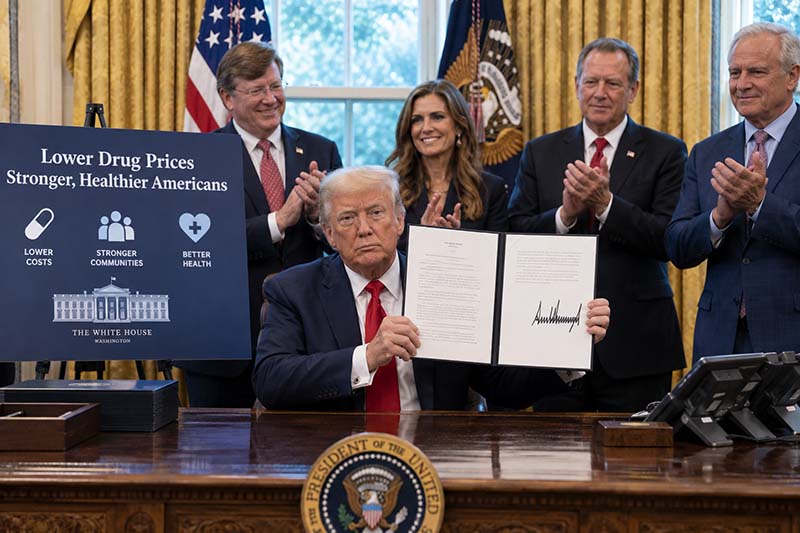


Payam Javan: The United States administration has announced the nationwide expansion of a program designed to align Medicaid prescription drug prices with international standards. Under the newly implemented GENEROUS Model, all 50 states, the District of Columbia, and Puerto Rico will gain access to most-favored-nation pricing for pharmaceuticals. This initiative aims to reduce government healthcare expenditures by leveraging supplemental rebates paid by manufacturers, effectively allowing state Medicaid programs to benefit from lower cost benchmarks previously utilized in international markets.
President Donald Trump, who spearheaded the initiative, characterized the program as a significant fiscal opportunity for individual states. By reducing the financial burden of high-cost medications, the administration projects that states will be able to reallocate billions of dollars toward other healthcare infrastructure and wellness improvements. According to estimates provided by the Council of Economic Advisers, the model could result in over $64 billion in taxpayer savings over the next decade, split between federal and state government budgets.
To facilitate this shift, the government has secured agreements with approximately 26 pharmaceutical manufacturers, including major industry players such as Pfizer, AstraZeneca, and Eli Lilly. These companies have committed to offering their lowest available prices to Medicaid programs, while also pledging to reinvest profits into domestic drug production. Additionally, the administration reported that international partners have agreed to adjust their own prescription drug pricing structures, a move the White House claims will help stabilize global costs.
During the announcement, officials highlighted the broader implications of these pricing agreements, noting that the initiative moves beyond simple cost-cutting. Dr. Mehmet Oz, administrator of the Centers for Medicare and Medicaid Services, revealed that certain manufacturers, such as those producing the blood thinner Eliquis, have pledged to donate significant quantities of medication directly to state programs. This supplemental support is intended to provide immediate relief to state budgets while ensuring continuity of care for vulnerable populations.
Health and Human Services Secretary Robert F. Kennedy Jr. framed the initiative as a necessary correction to a systemic cycle that previously forced states to prioritize pharmaceutical spending over preventative wellness and nutrition programs. By lowering the cost of essential medicines, officials argue that states will gain the fiscal flexibility to invest in preventative health measures, potentially improving long-term public health outcomes and reducing the overall reliance on chronic disease medication.
Alongside the GENEROUS Model, the administration continues to promote its TrumpRx.gov platform, which connects consumers directly with manufacturers for discounts on prescription drugs. The platform, which includes partnerships with major pharmacies, currently offers access to over 1,000 medications. While the long-term impact of the GENEROUS Model remains to be fully evaluated as an experimental program, the administration maintains that these combined efforts represent a major shift in how the United States approaches pharmaceutical procurement and public health investment.


