
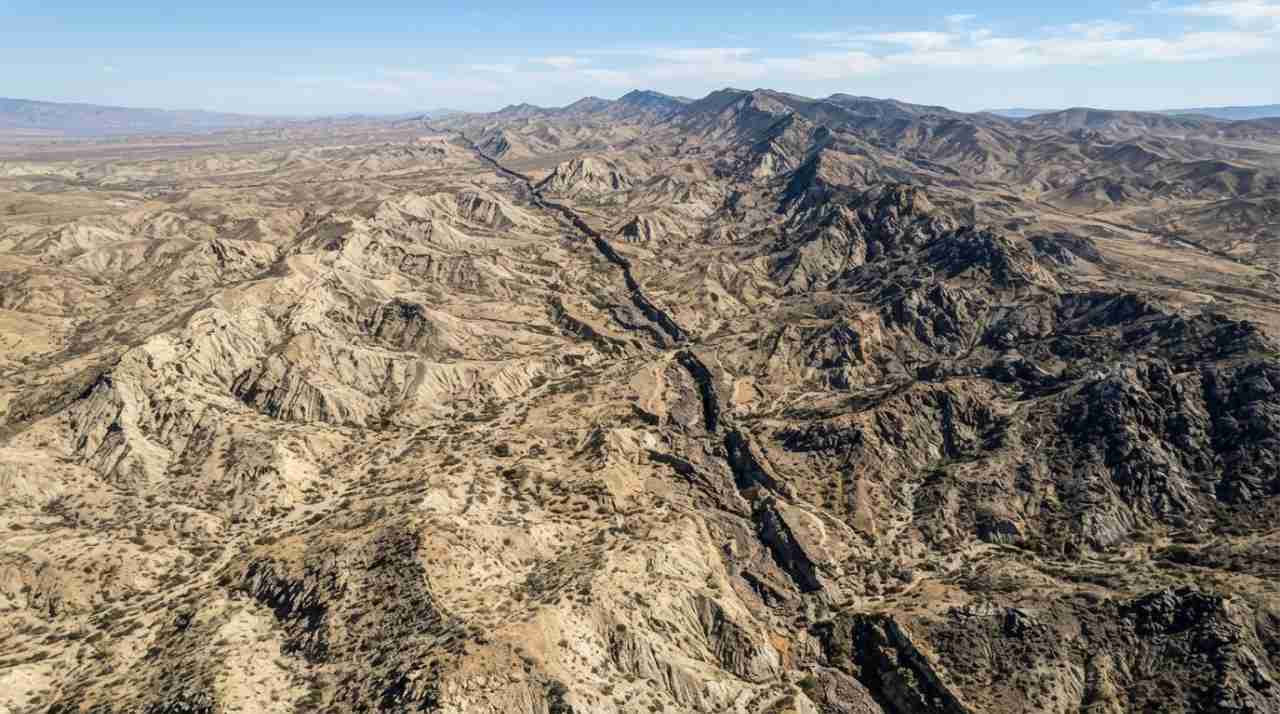


Payam Javan: Recent scientific assessments have indicated a heightened risk of significant seismic activity across California, with probabilities of a major earthquake in the San Francisco Bay Area rising alongside warnings of unprecedented stress accumulation in Southern California’s fault systems. According to updated calculations by the U.S. Geological Survey (USGS), the probability of a magnitude 6.7 or greater earthquake striking the Bay Area within the next 30 years has increased to 74.1 percent, up from the previous estimate of 72 percent.
The recalculated figures, which account for the passage of time since the last major assessment, place the highest individual probability on the Hayward-Rodgers Creek fault system at 34.3 percent. Meanwhile, the probability of a major rupture along the San Andreas Fault in the region has risen by 3.6 percentage points to 25.5 percent. Geophysicists emphasize that these updated metrics underscore the critical necessity for regional preparedness, noting that such an event is highly likely to occur within the lifetime of most current residents.
Hundreds of miles to the south, a separate study has revealed that two major fault systems—the San Andreas and San Jacinto—have accumulated some of their highest modeled stress levels in 1,000 years near the Cajon Pass. This critical junction, often referred to by researchers as an “earthquake gate,” has the potential to either halt a seismic rupture or allow it to transition between the two fault systems. Lead researchers describe the regional system as being in a critically loaded state, particularly given that more than 160 years have elapsed since the last major rupture in the area.
To evaluate these stress levels, scientists utilized geological evidence, including displaced sediment and historical tree-ring records, to reconstruct a millennium of seismic history. This data was integrated into a physics-based computer model designed to simulate how tectonic stress shifts and accumulates among three fault segments surrounding the Cajon Pass. The model estimated that by 2025, stress on the San Jacinto-Bernardino segment had reached 3.6 megapascals, surpassing its previous historical high of 2.9 megapascals, while the Mojave South segment reached 2.8 megapascals.
The research indicates that when stress levels on neighboring fault segments are closely aligned, ruptures are more likely to successfully pass through the Cajon Pass junction. A multi-fault rupture crossing this gate could simultaneously trigger activity across both systems, severely impacting heavily populated regions including Los Angeles, San Bernardino, Riverside, and the Coachella Valley.
While researchers emphasize that these models do not predict the exact timing of a future earthquake, they provide vital data regarding the physical state of the fault lines. Understanding these critically stressed systems allows emergency planners, infrastructure developers, and local governments to better prepare for a range of potential seismic scenarios, ultimately aiming to mitigate the impact of future disasters.


