
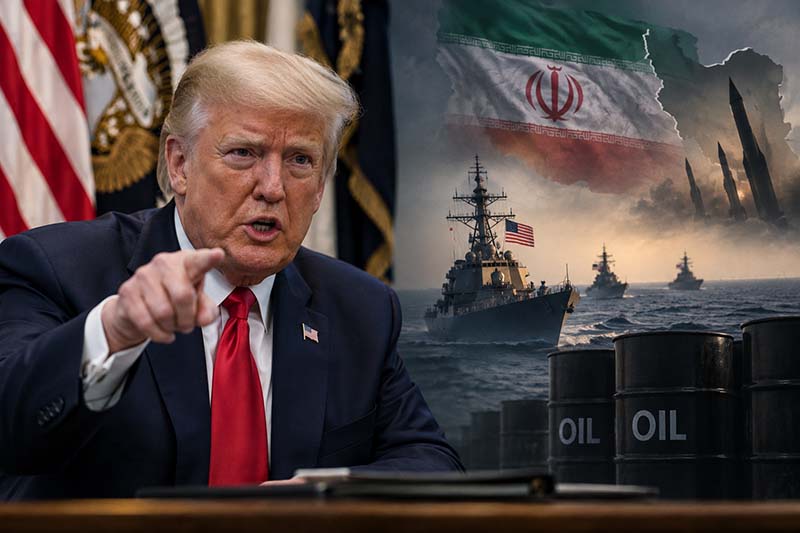


Payam Javan: President Donald Trump stated on Thursday that his administration is approaching a critical juncture regarding the ongoing conflict with Iran, describing the situation as a decision between launching significant military operations or pursuing a path toward de-escalation. While the president did not provide a specific timeline, he acknowledged that his administration is evaluating whether to intensify actions against the Iranian regime or seek an alternative resolution to the months-long standoff.
The U.S. military has maintained a strategic pause in direct kinetic strikes against Iran since early September, though the U.S. Navy continues to enforce a blockade on the nation’s ports. President Trump expressed satisfaction with the efficacy of this naval operation, asserting that it has successfully prevented the transit of Iranian oil. According to U.S. Central Command, over 100 vessels have been redirected to ensure compliance with these military measures.
This geopolitical tension continues to influence global energy markets, where crude oil prices have remained volatile. While benchmarks experienced a slight decline on Thursday, oil prices stayed above $100 per barrel. Investors remain cautious as they monitor the broader impact of the conflict, particularly regarding supply chain disruptions and the ongoing exchanges of fire between Saudi Arabia and Iran-backed Houthi forces in Yemen.
The regional instability has been compounded by damage to critical energy infrastructure, including the recent shutdown of Saudi Arabia’s East-West Pipeline. Although U.S. Energy Secretary Chris Wright indicated earlier this week that the pipeline was expected to be operational within days, the threat of further conflict in the region persists as a major concern for global energy security and market stability.
In parallel with military and naval operations, the U.S. Treasury Department is intensifying its economic pressure on Tehran through “Operation Economic Outcast.” This initiative, launched in August, targets Iran’s illicit oil trade and financial networks. The latest update from the Treasury included new sanctions against BitBank and several individuals accused of facilitating sanctions evasion through digital assets, further tightening the financial isolation of the Iranian government.
Tehran has responded to the heightened U.S. posture with warnings of its own. Senior Iranian military officials, including General Mohammad Karami, have publicly stated that any miscalculations by adversaries will be met with a decisive and powerful response. As both sides remain entrenched in their respective positions, the international community continues to watch for signs of whether the conflict will escalate into a broader regional war or move toward a diplomatic impasse.


