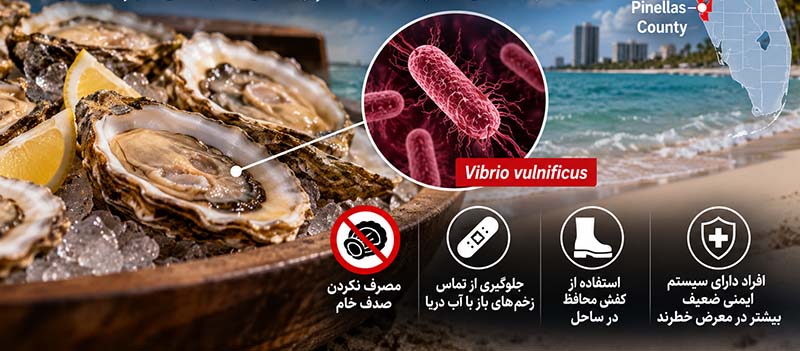


Florida health officials have confirmed the state’s fifth death from Vibrio vulnificus infection in 2026, with the latest fatality reported in Pinellas County. The Florida Department of Health’s surveillance data show 23 confirmed cases statewide this year and five deaths as of Sept. 24.
Vibrio vulnificus is a naturally occurring bacterium found in warm, brackish seawater. People can become infected by eating raw or undercooked shellfish, particularly oysters, or when an open wound comes into contact with contaminated seawater. The Florida Department of Health warns that infections can become severe, particularly in people with weakened immune systems or chronic liver disease.
Florida’s 2026 cases have been reported across multiple counties. The state surveillance tracker lists two cases in Broward, two in Miami-Dade, two in Palm Beach, three in Santa Rosa and one in Pinellas, while additional cases have been recorded in counties including Bay, Brevard, Duval, Hillsborough, Lee, Marion, Okaloosa, Polk and St. Johns. The five reported deaths occurred in Bay, Broward, Marion, Palm Beach and Pinellas counties.
The infection can cause gastrointestinal illness or serious wound and bloodstream infections. Symptoms can include fever, chills, low blood pressure, painful skin changes and blistering lesions, while wound infections can lead to tissue destruction and potentially life-threatening complications. The Florida Department of Health says people at higher risk should take particular precautions when entering warm coastal waters or handling raw shellfish.
Health officials recommend avoiding raw oysters and other raw shellfish, thoroughly cooking shellfish, refrigerating leftovers promptly and keeping open wounds away from warm salt or brackish water. People handling raw shellfish should consider wearing protective gloves, while those with weakened immune systems are advised to use appropriate footwear to reduce the risk of cuts from rocks and shells. Florida recorded 33 cases and five deaths in 2025, compared with 82 cases and 19 deaths in 2024.