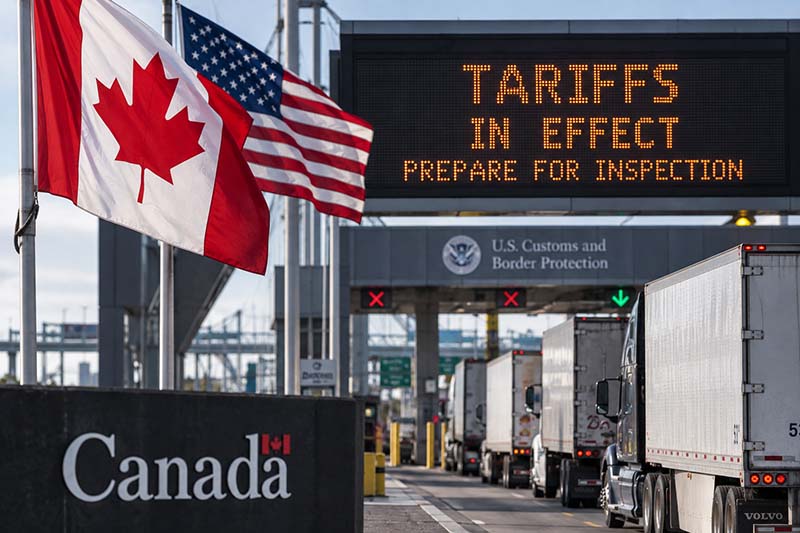


Canada’s retaliatory tariffs on U.S. products took effect shortly after midnight Tuesday, escalating an 18-month trade dispute between the two neighboring countries. Prime Minister Mark Carney’s government introduced the measures after trade negotiations with the United States broke down last month, increasing economic pressure on Canada’s largest trading partner.
The counter-tariffs cover approximately $20 billion worth of U.S. goods, with duties ranging from 15% to 50%. The measures target a broad range of products, including steel, furniture, clothing and electronics, marking a dollar-for-dollar response to tariffs imposed by the administration of U.S. President Donald Trump.
The escalation has also raised fresh concerns about the future of the United States-Mexico-Canada Agreement (USMCA), which is approaching its annual review. Canadian and U.S. officials have blamed each other for the collapse of negotiations over a potential agreement that appeared close to completion just two weeks ago. Economists and trade officials are increasingly concerned that prolonged uncertainty could weigh on Canadian investment and economic growth.
The latest dispute comes after U.S. tariffs imposed last month affected Canadian exports including wine, furniture, dairy products, cement, clothing, fishing equipment and hockey gear. Those measures covered about $20 billion, or roughly 5%, of Canadian exports to the United States. Nearly 68% of Canada’s total exports have gone to the U.S. this year, with about 80% of those shipments moving duty-free under the USMCA, providing some protection for the Canadian economy.
Canadian officials have continued to signal that they want to reach a mutually beneficial agreement, while trade experts have warned against allowing tensions to spiral further. Michael Harvey of the Canadian Agri-Food Trade Alliance said Ottawa needs leverage but should keep communication channels open with Washington. The dispute comes as Trump has threatened additional tariffs on Canadian vehicles and auto parts, adding to uncertainty over the future of economic relations between the two countries.