
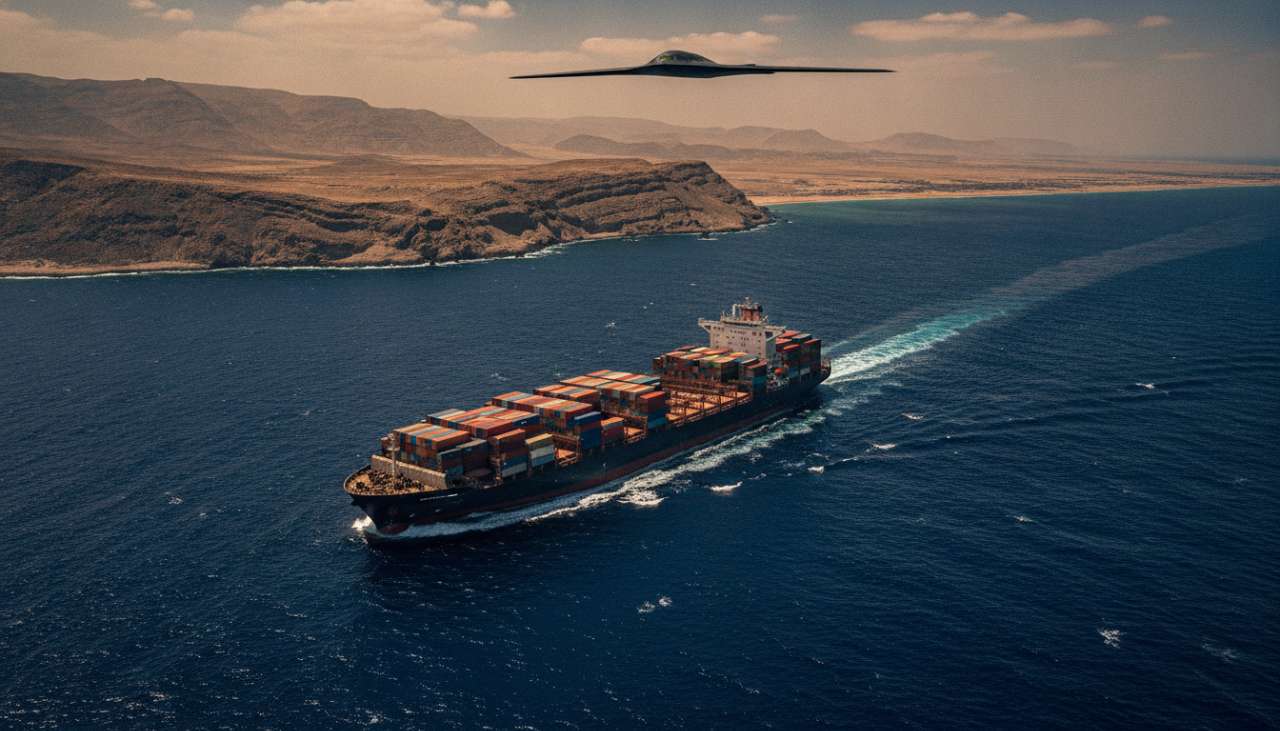


Payam Javan: Iran has announced plans to establish an “exclusion zone” near the Strait of Hormuz, targeting vessels attempting to transit the strategic waterway. Mohsen Rezaei, the newly appointed head of Iran’s Supreme National Security Council, stated that the proposed zone would extend from the perimeter of the current United States naval blockade toward the strait and into the Persian Gulf. According to Iranian officials, any identified vessel entering this zone with the intention of passing through the strait will be placed on Tehran’s sanctions list.
The announcement follows a significant escalation in regional tensions, marked by recent military exchanges between U.S. and Iranian forces. The U.S. military recently struck three Iranian oil tankers in retaliation for ballistic missile launches directed at U.S. warships. While Tehran claimed to have successfully targeted an unmanned U.S. vessel attempting to enter the Strait of Hormuz on Sunday, U.S. military officials dismissed the assertion as entirely unfounded.
The confrontation takes place against the backdrop of an ongoing U.S. naval blockade aimed at halting Iranian oil exports and restricting access to its ports. Supported by over 20 warships, the blockade has reportedly redirected 92 commercial vessels and disabled three others. This military pressure is coupled with intensified financial measures from Washington, targeting foreign financial institutions that facilitate Iranian transactions following the collapse of diplomatic negotiations.
Diplomatic efforts to resolve the conflict have stalled since a mid-June memorandum of understanding collapsed within days, with both sides trading accusations of violations. Rezaei expressed deep skepticism regarding the diplomatic process and the role of regional mediators, including Pakistan, Qatar, and Oman. He emphasized that future negotiations would require stringent guarantees, signaling a hardening stance among Iran’s new leadership.
The Strait of Hormuz remains a critical conduit for global energy supplies, though its security now heavily relies on international naval protection. U.S. Energy Secretary Chris Wright reported that approximately 9 million barrels of oil per day continue to transit the strait, representing about two-thirds of pre-conflict levels. Wright noted that these flows are sustained by U.S. Navy escorts protecting commercial tankers, expressing hope that other nations would join the maritime security effort.
Despite the stringent U.S. blockade and decades of international sanctions, Iranian leadership maintains that the country’s oil trade remains resilient. Rezaei claimed that Iran continues to export between 1 million and 1.5 million barrels of oil daily, suggesting that Tehran has developed mechanisms to bypass maritime restrictions. This assertion underscores the ongoing geopolitical struggle for control over one of the world’s most vital maritime choke points.


