
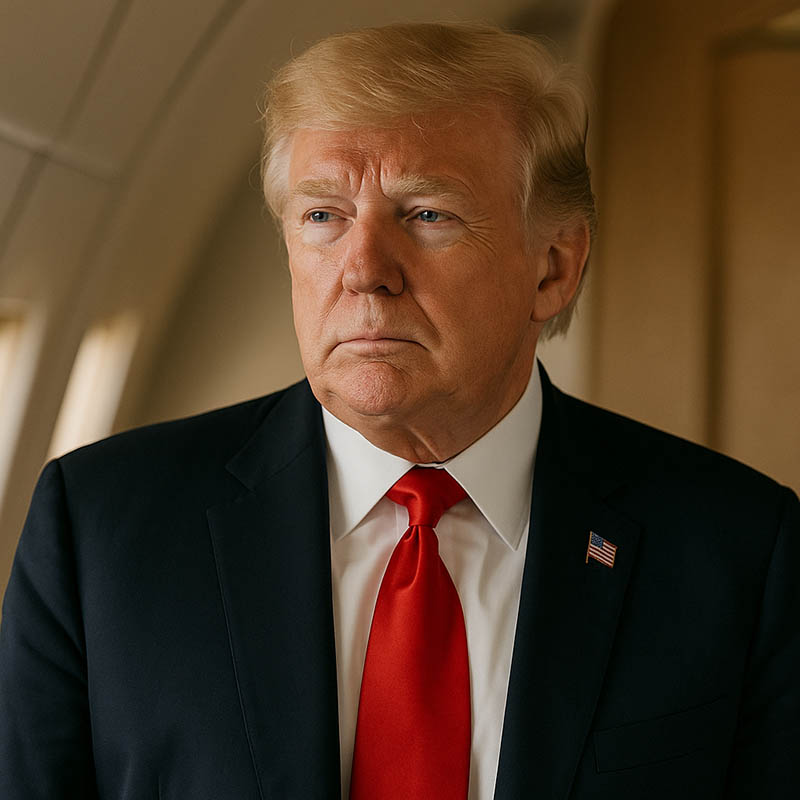


Payam Javan: U.S. President Donald Trump recently expressed openness to the concept of declaring a national security emergency to implement strict voting regulations ahead of the upcoming elections. During an interview with media host Wayne Allyn Root, Trump was asked about utilizing executive authority to bypass legislative hurdles, to which he responded, “stranger things have happened,” without offering further elaboration on specific plans.
The proposal, raised by Root during the August interview, suggests that Trump could leverage a 1983 U.S. Supreme Court precedent from the case INS v. Chadha to enact emergency measures. Under this proposed strategy, the executive branch would bypass Congress to mandate photo identification, require proof of citizenship for voting, and restrict the use of mail-in ballots across the nation.
This discussion comes amid legislative stagnation regarding the Safeguard American Voter Eligibility (SAVE) Act, a bill aimed at tightening federal voting requirements. Root noted that even if the legislation successfully passes Capitol Hill prior to the upcoming November elections, it would likely face immediate legal challenges from opponents, potentially delaying its implementation.
In response to these legislative challenges, Trump defended the efforts of the House of Representatives, noting that the chamber has passed the SAVE Act multiple times. He also praised House Speaker Mike Johnson for his leadership on the issue, expressing confidence in the Republican-led House’s commitment to election security measures.
The SAVE Act proposes significant changes to the National Voter Registration Act of 1993, including a mandate for individuals to present documentary proof of citizenship in person when registering to vote. Additionally, the bill introduces stringent federal photo identification requirements for both in-person and mail-in ballots, while establishing criminal penalties for election officials who register ineligible voters.
According to the mechanism proposed by Root, a national security emergency declaration regarding elections would theoretically bypass standard judicial review. Root argued that such an executive action could only be overturned by a two-thirds majority vote in both chambers of Congress, thereby allowing the rapid implementation of the proposed voting restrictions.
Despite the debate, the SAVE Act remains pending in the legislative process, with no definitive date scheduled for a full Senate vote as of August 2026. The bill is currently awaiting review by the Senate Rules Committee, while the Senate itself remains on recess until mid-September, leaving the future of the federal voting legislation uncertain.


