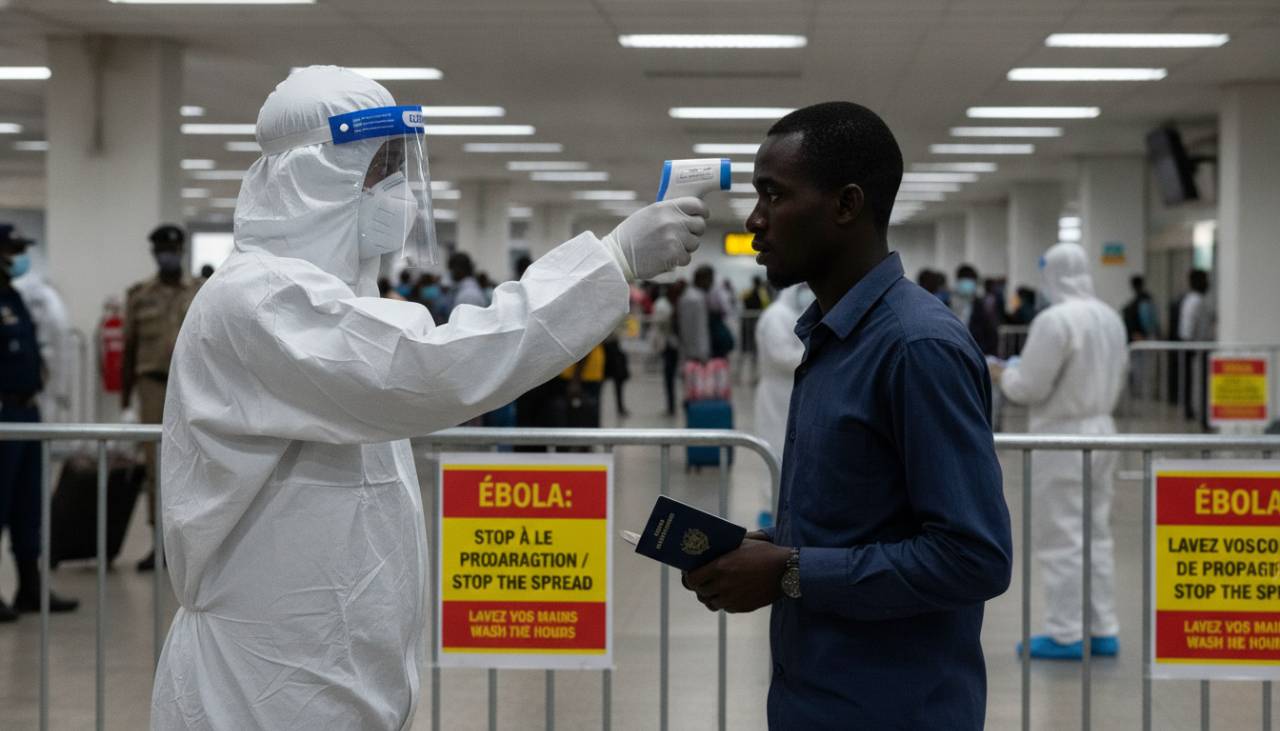


Congolese authorities have implemented strict travel restrictions following the confirmation of the first imported Ebola case in Europe. Under a new directive from the Democratic Republic of Congo’s Ministry of Health, individuals who have visited Ebola-affected provinces are barred from traveling internationally or domestically until they have spent three weeks outside the outbreak zone. The government has also introduced enhanced health screenings and mandatory pre-departure forms at all major entry and exit points to contain the spread.
The restrictions follow the detection of an Ebola case in France, marking the first time the current central African outbreak has reached Europe. The patient, a French doctor who recently returned from a humanitarian mission in Congo with the Alliance for International Medical Action, is currently hospitalized in stable condition under strict isolation. French health officials are actively tracing the doctor’s contacts, who are required to isolate at home for 21 days, though France has not implemented any formal travel restrictions.
The ongoing outbreak, which was first detected in May, has escalated rapidly, with Congolese health officials reporting 1,118 deaths and 291 confirmed cases as of late June, alongside 122 recoveries. In response to the growing health crisis, other nations have adjusted their border policies; the United States, for instance, has restricted entry for certain travelers coming from Congo, Uganda, and South Sudan. Meanwhile, the Africa Centers for Disease Control and Prevention has engaged in diplomatic discussions to ensure coordinated and non-disruptive international responses.
Despite the imported case, the European Centre for Disease Prevention and Control (ECDC) has assessed the risk of sustained Ebola transmission within Europe as “very low.” However, the agency advised European Union member states to remain vigilant and prepared for potential additional cases. Health authorities emphasize that robust protocols for early detection, rapid isolation, and treatment are already active across the continent to prevent further escalation.