


By: Prof. Dr. Seyed Saeid Zamanieh Shahri, MD and Prof. Dr. Sonia Sayyedalhosseini, MD
Diagnosis: Diagnosis of hypertension relies on repeated standardized measurements and out-of-office monitoring:
• Clinical setting measurements:
Blood pressure is assessed using sphygmomanometers or validated digital devices with standardized body/arm/cuff positioning. Repeated measurements across separate visits are essential for confirming the diagnosis.
• Ambulatory blood pressure monitoring (24-hour ABPM):
Captures the circadian rhythm of blood pressure and helps identify white-coat hypertension (elevated in the clinic only) or masked hypertension (normal in clinic but elevated in daily life).
• Numerical classification:
Thresholds for systolic and diastolic pressures define stages. Although classifications vary slightly among professional organizations, all aim to identify sustained elevation and its severity.
• Evaluation of secondary causes and target-organ damage:
When clinical or laboratory findings raise suspicion, additional testing—blood and urine studies, hormonal evaluation, renal vascular imaging, and assessment of cardiac, vascular, renal, or retinal structure—may be pursued.
• Complementary indices:
Measures such as arterial stiffness (e.g., pulse wave velocity) or blood pressure variability appear in research settings as supportive tools.
Thus, diagnosis rests not on a single reading but on integration of repeated values, clinical context, and, when needed, out-of-office assessments.
Technological and Scientific Advances: Recent technological evolution has focused on continuous measurement, novel sensors, and intelligent data analysis:
• Cuffless wearables: Devices using photoplethysmography (PPG), optical tensiometry, piezoelectric waves, or micro-/ultrasonic sensors aim to measure blood pressure without a cuff and with high convenience. Ongoing research addresses calibration challenges, signal stability, and inter-individual/inter-condition variability.
• New-generation devices: Lighter devices with larger memory and adaptive sampling protocols are being developed to better capture circadian variability and abnormal nighttime patterns (e.g., non-dipping).
• Data integration platforms: Multi-source systems aggregate data from home devices, wearables, clinical settings, and contextual inputs (stress, sleep, activity), presenting unified timelines and extracting trend analyses, anomaly detection, and variability metrics.
Summary: Hypertension is a multi-causal, multi-system condition leading to sustained elevation of arterial pressure. Cardiac output and vascular resistance, modulated by neurohormonal axes, endothelial function, vascular remodeling, and renal volume regulation, form its physiological foundation.
Causes may be primary or secondary, and risk factors range from age and genetics to metabolic, behavioral, and environmental contributors.
Clinical presentations are often nonspecific or absent, while complications span the heart, brain, kidneys, eyes, and large/peripheral vessels.
Diagnosis depends on repeated standardized measurements, out-of-office monitoring, and evaluation of target-organ involvement. Technological progress toward cuffless sensors, smart wearables, flexible electronics, machine-learning algorithms, and multi-source data integration is reshaping the landscape of blood pressure assessment and understanding.
****************************
Hyperlipidemia Diseases:
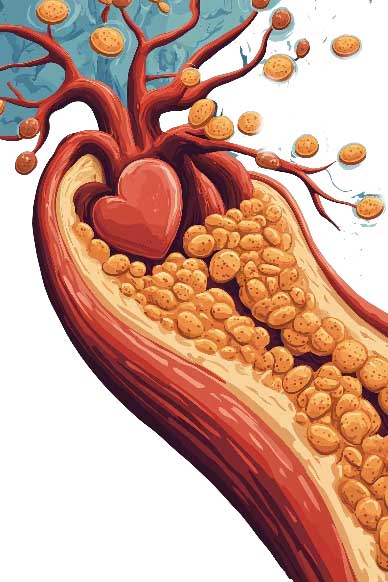
Hyperlipidemia refers to a group of conditions in which the levels of lipids and lipoproteins in the blood, or more simply, blood fat levels, are higher than the reference range for a healthy population. The most important components considered in this context are:
• Total cholesterol
• Low-density lipoprotein (LDL)
• High-density lipoprotein (HDL)
• Triglycerides
• Subtypes such as VLDL, IDL, and Lipoprotein(a)
In some sources, the term ‘dyslipidemia’ is used to describe any disorder in the composition of blood lipids; that is, it includes not only increases but also abnormal decreases or changes in ratios.
In current review texts, hyperlipidemia is described as one of the key underlying factors in the development of atherosclerosis and cardiovascular diseases, and it usually involves a combination of genetic backgrounds and acquired factors.
To be continued …


