
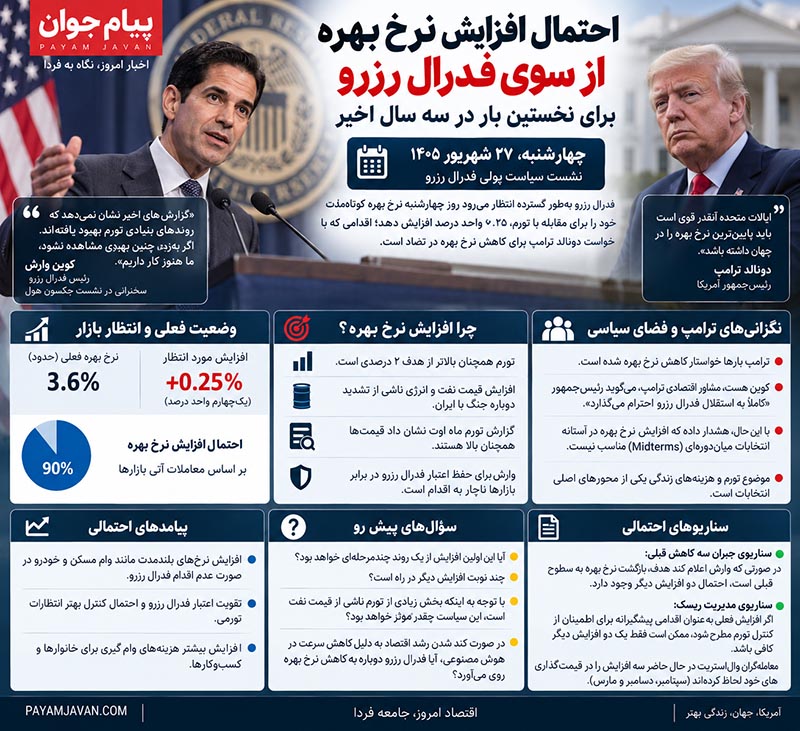


Payam Javan: The Federal Reserve is widely expected to raise its short-term interest rate on Wednesday for the first time in three years as policymakers respond to persistent inflation. The anticipated quarter-point increase would put the central bank at odds with President Donald Trump, who has repeatedly called for lower borrowing costs. The federal funds rate currently stands at about 3.6%.
The expected move follows recent comments from Fed Chair Kevin Warsh, who said at the central bank’s annual conference in Jackson Hole that recent inflation data had not demonstrated sufficient progress toward the Fed’s 2% target. While a rate increase is not guaranteed, futures markets have placed the probability of a hike at about 90%, with expectations rising after August inflation data showed continued price pressures.
The decision comes less than two months before the U.S. midterm elections, with inflation and affordability among the major economic issues facing voters. Trump has urged the Fed to lower rates, while his economic adviser Kevin Hassett has publicly emphasized the importance of central-bank independence but also expressed caution about raising rates so close to the elections. Financial markets generally expect the Fed to base its decision on economic conditions rather than political considerations.
A rate increase could also influence longer-term borrowing costs, including mortgages and auto loans. Economists note that a stronger commitment to fighting inflation could potentially reduce some of the inflation premium embedded in longer-term Treasury yields. At the same time, the Fed faces a difficult policy environment because higher oil and gas prices linked to the war in Iran are contributing to inflation, while the central bank has limited ability to directly influence energy prices.
Investors will closely examine Warsh’s comments for indications of how many additional rate increases could follow. Deutsche Bank chief U.S. economist Matthew Luzzetti said it would be unusual for the Fed to raise rates only once, while futures markets have been pricing in additional increases in December and March. Policymakers must also weigh the possibility of an economic slowdown, including weaker growth linked to artificial intelligence investment, which could eventually strengthen the case for lower rates.


