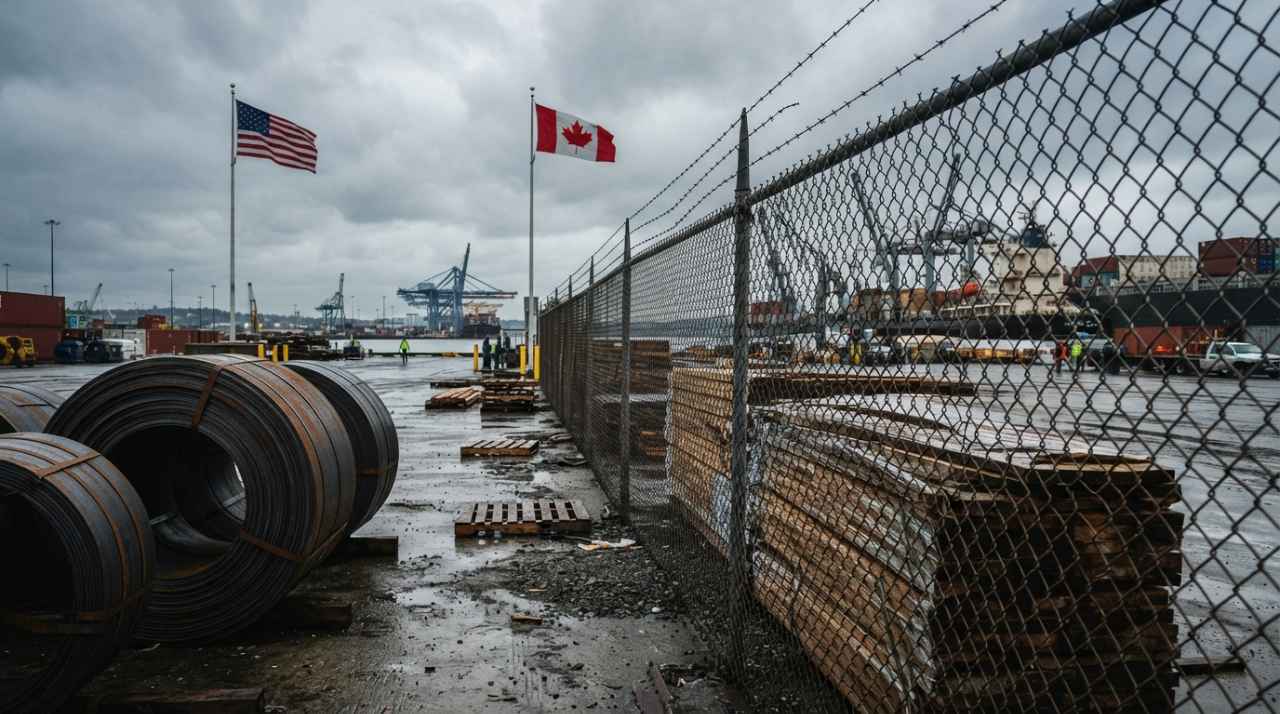


Payam Javan: The United States has implemented new 50 percent tariffs on Canadian imports following the collapse of bilateral trade negotiations. U.S. Trade Representative Jamieson Greer announced the measures after Canada reportedly declined to finalize a proposed trade agreement, marking a significant escalation in trade tensions between the neighboring nations.
According to Greer, the proposed agreement would have granted Canada substantial tariff reductions on key exports, including steel, aluminum, automobiles, and lumber. The U.S. administration characterized the offer as a historic partnership aimed at enhancing supply chain coordination in aerospace, addressing unfair trade practices, cooperating on critical minerals, and strengthening enforcement against forced labor imports. Greer expressed disappointment, stating that last-minute demands and walk-backs by Canadian negotiators disrupted the progress made earlier in the week.
Canadian Prime Minister Mark Carney defended his government’s decision to suspend negotiations and recall his delegation to Ottawa, arguing that the final U.S. proposals were unfair and uneconomic. While acknowledging that progress had been made toward securing a favorable deal, Carney stated that sudden shifts in the American terms undermined the reliability of the potential agreement.
In response to the U.S. tariffs, Carney announced that Canada will implement reciprocal “dollar-for-dollar” tariffs to shield domestic workers and businesses from economic fallout. The Prime Minister noted that the bilateral relationship has fundamentally shifted, indicating that Canada is preparing for a new era of trade relations with its southern neighbor rather than expecting a return to previous economic dynamics.
The newly imposed U.S. tariffs target approximately five percent of Canada’s exports to the United States, focusing primarily on specific goods within the dairy, alcohol, and consumer product sectors. Washington previously justified these measures by citing concerns over Canada’s dairy supply management system, provincial restrictions on U.S. alcohol sales, and Ottawa’s existing retaliatory tariffs on American automotive products.
Prior to the deadline, Canada had dismantled most of its retaliatory tariffs but maintained duties on autos, steel, and aluminum, arguing that the corresponding U.S. tariffs violated the United States-Mexico-Canada Agreement (USMCA). While Canadian provinces had signaled a willingness to restore U.S. alcohol sales to shelves in the event of a successful negotiation, Ottawa remained firm on protecting its agricultural supply management system, leaving key structural disputes unresolved.