
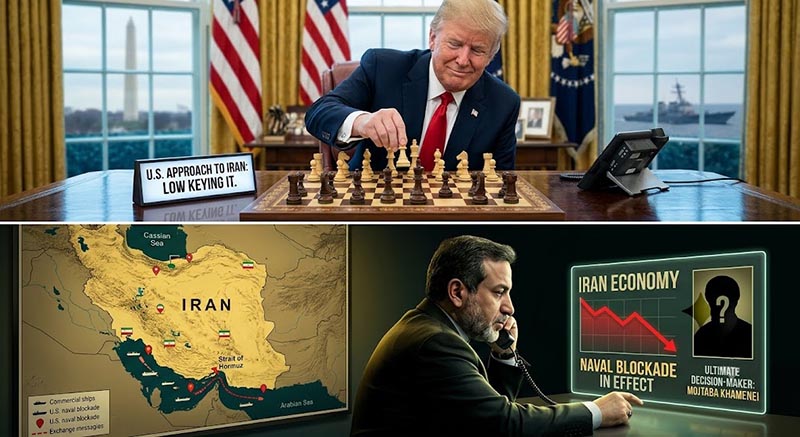


Payam Javan: United States President Donald Trump has announced that the U.S. is adopting a “low key” approach to negotiations with Iran, suggesting that ongoing economic pressures and a naval blockade are severely impacting Tehran’s economy. Speaking on the situation, Trump noted that the U.S. is currently in a semi-negotiating phase while observing the effects of high inflation and financial constraints within Iran. This shift in posture follows a temporary halt in daily U.S. military strikes against Iranian targets, which American officials hope will pave the way for diplomatic progress.
While active airstrikes have paused, a U.S. naval blockade remains in effect, significantly restricting maritime traffic to and from Iranian ports. According to U.S. Central Command (CENTCOM), dozens of commercial vessels headed to or from Iran have been redirected, boarded, or disabled in recent operations. The temporary cessation of active hostilities has also led to a notable decline in global energy markets, with West Texas Intermediate and Brent crude oil prices dropping significantly, alongside a minor decrease in national retail gasoline prices in the United States.
In response, Iranian Foreign Minister Abbas Araqchi stated that negotiations regarding the strategic strait separating the two nations are in their final stages, though he reiterated that the maritime passage would not reopen unless specific conditions are met. Araqchi emphasized that Tehran is currently refusing direct talks with Washington, citing alleged U.S. breaches of a previous interim agreement signed in June. Consequently, communication between the two governments is currently being conducted through third-party intermediaries.
To resolve the impasse, the secretary of Iran’s Supreme National Security Council, Mohammad Baqer Zolqadr, outlined several key demands, including the cessation of U.S. military operations against Iran and its regional allies, the lifting of all sanctions and blockades, and the unfreezing of Iranian assets. The diplomatic deadlock persists amid questions surrounding Iran’s ultimate decision-making authority, led by Mojtaba Khamenei. Khamenei has not made a public appearance since late February, following a joint U.S.-Israeli airstrike that killed his predecessor.
Meanwhile, U.S. Vice President JD Vance emphasized that the conflict with Iran is far from over, describing the current situation as an ongoing strategic engagement where Washington is employing a wide array of economic and diplomatic tools. Vance indicated that the primary objective remains ensuring that Iran’s leadership agrees to terms that satisfy U.S. security requirements, particularly concerning regional stability and non-proliferation. As both sides maintain firm stances, the international community continues to monitor the delicate balance of pressure and diplomacy.


