
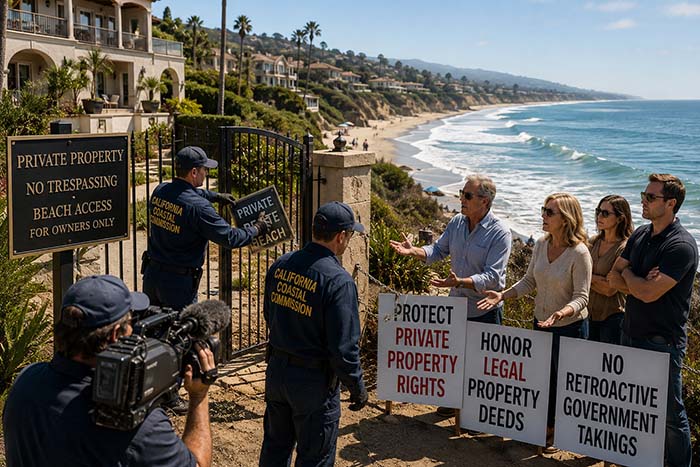


Along the coastlines of Malibu, Santa Barbara, and Newport, a new conflict has emerged between the California government and beachfront property owners. Citing “public access to natural resources,” the state declared that no one — not even private landowners — may block public entry to beaches. The decision triggered a wave of protests among wealthy homeowners, celebrities, and property rights advocates.
In recent months, the state has taken steps such as opening private pathways, removing “No Trespassing” signs, and even threatening to alter the legal status of certain coastal areas. Owners argue these actions go beyond regulation and amount to interference with private property rights.
Supporters, including social and environmental groups, defend the policy as a move toward social equity and equal access, insisting that beaches are a “public heritage” that should not be monopolized by multimillion-dollar estates.
Critics, however, warn that such intervention in private ownership goes far beyond a property dispute. They argue that when someone buys a coastal home under existing laws, they expect those laws to remain stable. If the state can later change them and declare parts of private land public, it undermines the security of property rights.
These critics emphasize that democracy is not just about voting — it’s about protecting individual rights from government overreach. If the state can make private pathways public today, it might apply similar logic elsewhere tomorrow. Analysts describe this trend as one that could gradually erode California’s democratic structure.
Ultimately, the battle over private beaches has become more than a legal fight; it symbolizes the growing tension between state power and individual freedom, raising serious concerns about the future of democracy in California.


