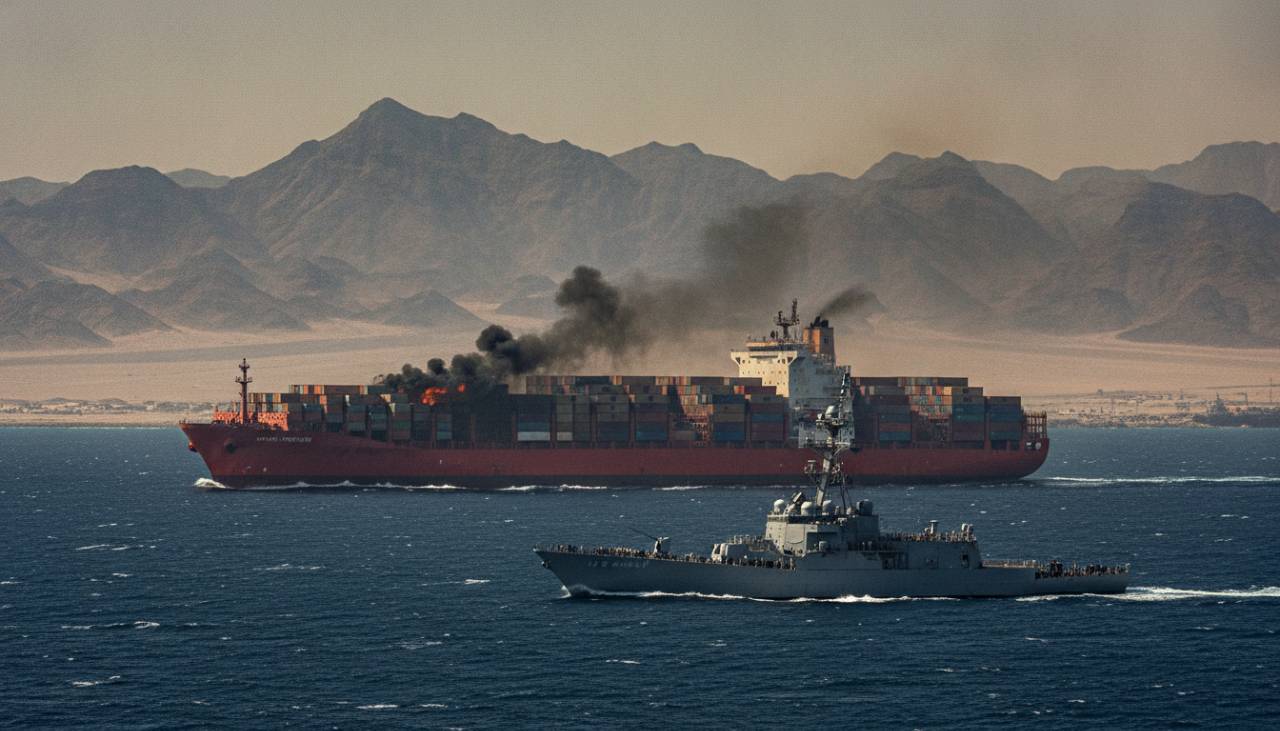


A recent ceasefire agreement between the United States and Iran is facing severe strain following a series of military exchanges and maritime incidents in the Persian Gulf region. On June 27, Bahrain reported being targeted by Iranian drone strikes, while a commercial vessel transiting the Strait of Hormuz was struck by an unidentified projectile. These developments occurred less than a day after United States Central Command launched retaliatory airstrikes against missile and drone storage facilities inside Iran, which Washington stated was in response to an earlier Iranian assault on a cargo ship.
In response to the latest maritime incident, the Joint Maritime Information Center, overseen by the U.S. Navy, elevated the threat level for vessels transiting the Strait of Hormuz to “substantial.” According to the United Kingdom Maritime Trade Operations, the affected vessel sustained damage to its bridge, though no casualties or environmental hazards were reported. The maritime center advised mariners to exercise extreme caution, warning of the potential presence of naval mines and ongoing clearance operations, while the United Nations International Maritime Organization temporarily suspended its vessel escort services in the corridor.
Bahrain’s Ministry of Foreign Affairs strongly condemned the drone strikes on its territory, characterizing the actions as a direct violation of its sovereignty and international law. Bahraini officials emphasized that the attacks undermine regional de-escalation efforts and breach the Islamabad Memorandum of Understanding, a ceasefire agreement signed on June 17, 2026, aimed at halting hostilities and ensuring free commercial navigation. Tehran has not officially claimed responsibility for the latest ship attack, though the Islamic Revolutionary Guard Corps previously asserted that vessels must adhere strictly to Iranian-designated routes in the strait.
The escalation has drawn sharp criticism from Washington, where U.S. officials accused Tehran of violating the newly established truce. Vice President JD Vance warned that continued aggression would be met with military responses, urging Iran to utilize diplomatic channels to address disputes regarding the implementation of the memorandum. As naval forces increase their presence in the vital trade corridor, the future of the ceasefire remains uncertain, with both sides trading accusations of destabilizing the strategically critical waterway.