

Payam Javan: At least 43,000 people have been killed by forces of the Islamic Republic during the recent nationwide protests in Iran, according to extensive investigations, field research, verification of images and videos, and interviews with multiple sources inside the country.
The protests began on December 28, 2025, when shopkeepers in Tehran closed their businesses, quickly expanding into widespread political demonstrations across Iran. In the absence of effective political participation mechanisms, public dissent once again moved to the streets.
Multiple reports and eyewitness accounts indicate that security forces responded with organized and premeditated violence, including the use of live ammunition against unarmed protesters. Verified evidence points to the deployment of snipers on rooftops and overpasses, with gunshot wounds predominantly to the head and vital organs—suggesting an intent to kill rather than disperse crowds.
Between January 8 and 10, 2026, security forces reportedly used automatic weapons, close-range fire, pellet guns, tear gas in enclosed spaces, and conducted aggressive motorized assaults. Protesters were pursued into residential areas and private homes, and in some cases, shot after seeking refuge. One documented incident in Karaj involved the killing of five members of a single family by sniper fire.
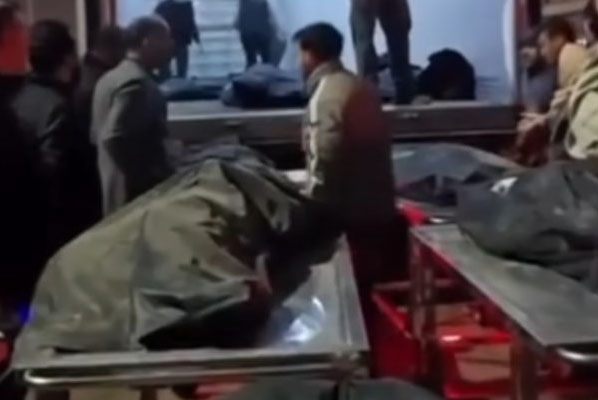
Initial death toll estimates of around 20,000 were later revised upward following further documentation and testimony from sources within Iran’s health system. A significant majority of the fatalities reportedly occurred during a two-day period coinciding with an internet shutdown. Witnesses also report that wounded protesters were abducted from hospitals by security forces, denied medical care, and later died.
In addition to the fatalities, an estimated 350,000 people have been injured and more than 20,000 arrested. Reports detail widespread torture, ill-treatment, enforced disappearances, and arrests inside medical facilities.
The International Center for Human Rights in Iran (ICHR) has rejected government claims attributing the protests to foreign actors, stating there is no credible evidence to support such allegations. Legal experts affiliated with ICHR argue that the documented actions constitute extrajudicial killings and crimes against humanity, prosecutable under international law, including the principle of universal jurisdiction.
ICHR warns that international silence in the face of this level of violence risks enabling further atrocities and escalation.